How to Choose a Reliable Second-Hand Washing Machine: Key Checks and Tips
Outline:
– Why second-hand can be a smart, sustainable choice
– Where to source and how to pre-qualify a listing
– Hands-on inspection and testing checklist
– Comparing features, capacity, and efficiency
– Delivery, setup, cleaning, and long-term care with a practical conclusion
Why Second-Hand Makes Sense: Savings, Longevity, and Impact
When a washer quits on a rainy Tuesday, the urge to rush into a shiny replacement is real. Yet stepping back for a second-hand option can be a savvy move that balances budget, reliability, and environmental impact. For many households, a pre-owned machine costs a fraction of a new unit, often delivering years of dependable service with minimal compromise. The key is to understand value: not just sticker price, but the total cost of ownership and how long the machine can realistically serve your laundry routine.
Cost savings are immediate and tangible. Used washers commonly list for roughly 40–70% less than their new counterparts, with local pricing often in the range of 100–350 USD for standard-capacity models, depending on age, condition, and features. Even if you add fresh hoses, delivery, and a basic tune-up, you often remain well under the cost of buying new. Meanwhile, many people replace washers not because they’ve failed, but because they’ve remodeled, moved, or upgraded features—meaning plenty of solid machines are circulating with years of life left.
Typical service life for a well-maintained washer hovers around a decade or slightly more, and lighter-use households can stretch that further. That means picking up a machine that’s three to six years old could net you a reliable run at a compelling price. Of course, the curve cuts both ways: very old units may have higher energy and water use, shrinking long-term savings. This is where a quick review of efficiency traits and a hands-on test become decisive.
The environmental story is equally strong. Manufacturing a new washer carries an embedded footprint, from mined metals to assembly and freight. Lifecycle studies suggest the embodied carbon of a washer can total hundreds of kilograms of CO2e before it even washes a single shirt. Buying second-hand defers that impact and reduces the flow of appliances to landfills. You also conserve materials—steel, plastics, rubber—and the energy needed to process them. For renters, students, and budget-conscious families, that’s a win you can feel good about.
Consider these practical upsides:
– Lower upfront cost, with room in the budget for hoses, delivery, or minor repairs
– Immediate availability, often locally, reducing wait times and shipping impact
– Flexibility to test the exact unit you’ll own, rather than trusting a stock photo
– Lower environmental footprint by extending the life of an existing appliance
Finding and Vetting Listings: Sources, Questions, and Red Flags
Start by deciding where you’re comfortable shopping, because source influences condition, price, and recourse if something goes wrong. Private sellers, community marketplaces, and neighborhood boards can yield the lowest prices, especially during moves or remodels. Refurbishers and appliance resellers charge more, but they usually offer cleaning, basic reconditioning, and some form of return window. Donation centers and property managers sometimes rotate working machines at fair prices, too; timing and patience help.
Before you drive across town, pre-qualify the listing with clear, concise questions. Focus on age, usage, and history, and aim to verify that the machine can be tested on-site. Ask:
– How old is the washer, and roughly how many loads per week did it run?
– What’s the reason for selling—moving, upgrading, space constraints, or an issue?
– Has it needed repairs, and do you have receipts or a service history?
– Can we run a short cycle or at least fill, agitate/tumble, drain, and spin?
– Are there any known leaks, odors, error messages, or unusual noises?
– Is pickup ground-level, and are there stairs or tight corners to navigate?
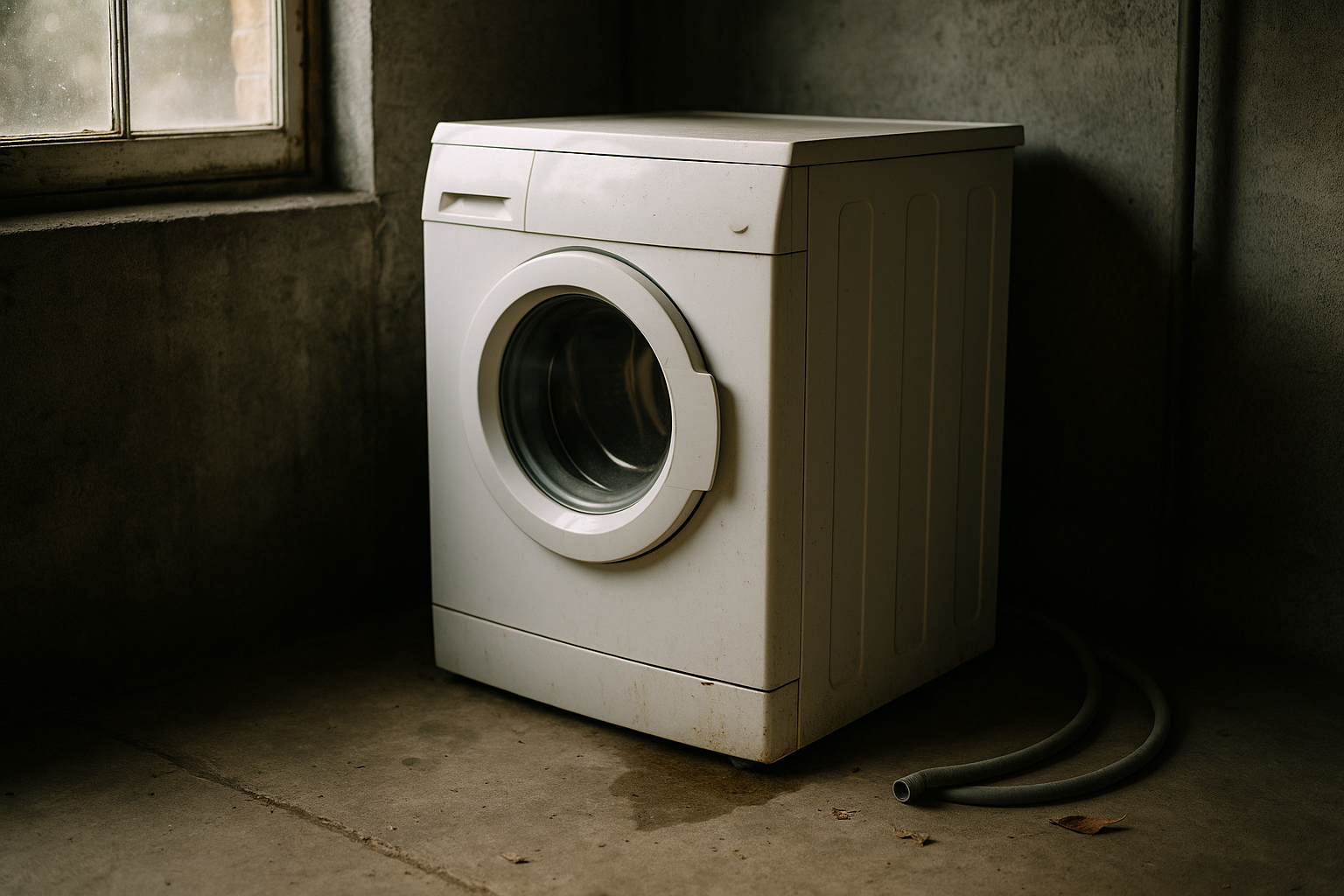
Use photos to your advantage. Look for clean gasket edges on front-loaders, intact knobs and doors, and a cabinet free of major dents at the corners (where a bump could indicate a hard drop). A lightly dusty machine is normal; caked-on residue or heavy rust streaks may hint at neglect. If a listing is sparse, politely request extra angles: behind the unit, inside the drum, the underside if accessible, and a clear view of water connections and the drain hose.
Price-sense check the listing against local results. If a machine seems far cheaper than comparable units without a clear reason, proceed carefully. Watch for phrases like “probably just needs a cheap part,” persistent relistings, or promises of incredible performance without a demonstration. Be alert to red flags:
– No option to test, or claims that water or power “isn’t available”
– Strong musty smell or heavy detergent crust visible in photos
– Missing back panel, cut power cord, or mismatched parts taped in place
– Vague answers about leaks, error codes, or prior flooding
Negotiation can be simple and respectful. Share your plan to test briefly, arrive on time, and bring basic supplies (rags, flashlight, a small bottle of cleaner). A fair offer backed by a quick pickup often wins. If you’re buying from a refurbisher, ask about the checklist they use, what’s been replaced (hoses, pump, belt, suspension parts), and whether a short return window is included. Clarity now prevents headaches later.
On-Site Inspection: A Practical Checklist You Can Follow
Arrive prepared, and you can learn more in 10–15 minutes than any listing will reveal. Bring a flashlight, paper towels, and a small cup to check water drainage if needed. If the seller allows, run a short cycle or at least a fill, agitate/tumble, drain, and spin test. Safety matters: confirm there’s a grounded outlet, the floor is dry, and hoses are secure before you start.
Begin with a general sweep. Check the cabinet for dents near corners, which can signal rough handling. Inspect the inlet valves and hoses for bulges, cracks, or corrosion at the fittings. Peer behind and beneath the unit to spot fresh water trails or dried mineral halos—both can point to slow leaks. Pull the door open: on front-loaders, gently press the gasket lip and look for black sludge, tears, or trapped debris; on top-loaders, check the rim for chips and the tub for a smooth surface without sharp burrs.
Test the basics methodically:
– Power: The control lights or dial movement should respond smoothly, with no flicker or burnt smell.
– Fill: Confirm hot and cold fill individually if possible. Slow cold-only fill may indicate a clogged screen or a failing valve.
– Agitation/Tumble: Listen for a smooth rhythm. Loud clacks, grinding, or a stalled motion can suggest worn drive parts.
– Drain: Water should leave briskly. A weak trickle hints at a clogged filter, kinked hose, or a tired pump.
– Spin: The drum should ramp up without harsh shaking. A deep rumble that grows with speed can indicate bearing wear; a walk across the floor points to suspension or leveling issues.
For front-loaders, gently lift the front of the drum from inside to feel for excessive vertical play; a little movement is normal, but a clunk is not. Check the door lock: it should latch firmly and release without delay at cycle end. For top-loaders, ensure the lid switch clicks positively and the agitator isn’t loose at the hub. With either style, examine the drain hose for soft spots and the standpipe height if you can see it; a too-low drain can cause siphoning and poor rinse results.
Smells tell stories. A sour odor suggests biofilm buildup; it’s often fixable with a thorough cleaning routine but use it to negotiate. A burned or acrid scent during spin is more serious and can mean electrical or motor issues. If possible, spin a small towel load; a full drum is more revealing than an empty one. Finally, ask to see the machine in place and in use—moving it before testing can mask slow leaks or unstable feet that the current floor was compensating for.
Features and Efficiency: What Actually Matters in Daily Use
Specifications can feel like alphabet soup, but only a handful truly shapes your daily experience and long-term costs. Start with capacity: a typical family-sized washer is roughly 4.0–5.0 cubic feet, while compact units run smaller. Bigger isn’t automatically better; oversized drums can waste water and energy on small loads and may encourage overstuffing, which reduces cleaning and stresses components. Match the drum to your laundry rhythm—frequent small loads do well in mid-size machines, while bulky bedding benefits from the extra space of a larger drum.
Consider orientation and mechanics. Front-loaders generally clean with gentle tumbling and use less water than traditional top-loaders with a central agitator. Typical water use per cycle can range around 10–20 gallons for many front-load designs, whereas older top-loaders can draw 30–45 gallons. Newer high-efficiency top-loaders narrow that gap, sometimes landing near 15–25 gallons, but inspect the specific model and cycle options you’ll actually use. Less water usually means lower energy for heating and better rinse efficiency, but overly low water levels can struggle with very dirty workwear—choose accordingly.
Spinning power matters because water removal at the washer saves time and electricity in the dryer. A higher maximum spin speed—think roughly 1,000–1,400 RPM on many efficient models—can leave clothes noticeably drier than a 600–800 RPM cap. During your test, feel the laundry at cycle end; this “hand meter” often tells you more than a spec sheet. Noise, too, is a quality-of-life factor: well-balanced machines hum and thrum; harsh banging, rattling, or a bearing howl signals future bills.
Efficiency numbers translate to bills over months, not days. Annual electricity use can vary widely: many efficient machines fall near 80–150 kWh/year under standardized assumptions, while older or less efficient units may double or even triple that in heavy-use homes. Water costs compound the difference, especially where rates or sewer fees are high. If you line-dry or live in a mild climate, electricity savings may weigh less than performance or price; if you run daily loads with a vented dryer, spin speed and water extraction carry extra value.
Features worth prioritizing are practical, not flashy:
– A quick-wash or express cycle for lightly soiled clothes
– A heavy or bulky setting for towels, denim, and bedding
– Adjustable spin speeds to reduce vibration on certain floors
– A simple self-clean or hot-wash option for routine maintenance
– Clear cycle progress indicators and a pause option to redistribute loads
Match features to your household:
– Small apartments: compact footprint, quiet operation, and decent spin speed
– Families: reliable heavy cycle, strong rinse, and a mid-to-large drum
– Allergy concerns: hot-wash capability and thorough rinsing
– Shared spaces: sturdy build, intuitive controls, and easy-to-clean filters
Conclusion and Setup: Clean, Install, Maintain, and Own It Well
Sealing the deal is only half the journey; a thoughtful setup is what turns a good find into a dependable daily helper. Start with a deep clean before the first real load. Remove and rinse detergent drawers and screens. Wipe the gasket on front-loaders, pulling back the lip to chase out lint and grit. Run a hot maintenance cycle with a descaling agent like citric acid or a washing-machine cleaner (follow label directions). If you use bleach for sanitation, run it alone and never mix it with acids or vinegar; afterwards, run a plain rinse to clear any residue.
For installation, put safety and stability first. Replace old inlet hoses with new braided stainless or quality rubber, and use fresh washers at the fittings. Hand-tighten, then snug gently—overtightening can crack plastic inlets. Ensure the drain hose is secured and set to the recommended height to prevent siphoning. Level the machine with a spirit level, adjusting feet until it sits solidly on all corners. On front-loaders, confirm that transport bolts were removed; if they’re still in place, the machine will shake violently and could damage its suspension.
Early maintenance habits pay off for years:
– Leave the door or lid ajar after washes to reduce moisture and odors
– Wipe the gasket and rim weekly; clean the pump filter or coin trap monthly
– Measure detergent; using less than you think often cleans better and reduces buildup
– Balance heavy loads with a few lighter items to prevent chronic vibration
– Check hoses annually and replace them every five years or at the first sign of wear
Costs don’t end at purchase, but they can remain friendly with foresight. Budget a small reserve for contingencies like a drain pump or door lock; these parts are commonly replaced and usually affordable relative to the price of the machine. Keep receipts for any work, and note cleaning intervals on a calendar. If you bought from a refurbisher, test all major cycles within the return window so any issues surface while you have support.
For renters, students, first-time buyers, and practical households alike, a second-hand washer can be a reliable cornerstone of home life. By pairing a smart search with a hands-on inspection and a simple maintenance routine, you stack the odds in your favor: lower costs up front, calmer laundry days, and a lighter environmental footprint. Choose deliberately, set it up right, and your next spin cycle will start not just clean—but confidently under your control.