A Practical Guide to Solar Panels: Types, Costs, and Installation Considerations
Solar Basics and Your Roadmap
Solar panels transform sunlight into usable electricity through the photovoltaic effect: photons knock electrons loose in a semiconductor, creating a flow of current. A panel (module) contains many cells wired together; multiple panels form an array; and an inverter turns direct current (DC) into grid-synchronized alternating current (AC). Performance is rated at Standard Test Conditions (STC), but your roof is rarely at STC. Real-world output depends on solar resource, temperature, tilt, azimuth, shading, and system design. To keep you oriented, here is a quick outline of what this guide covers and how it fits into a practical decision path.
Outline for this guide:
– How PV generates power and what ratings mean
– Panel technologies and why efficiency is only one factor
– Design choices: array layout, inverters, wiring, and safety
– Costs, incentives, financing, and simple payback math
– Installation steps, permitting, and utility interconnection
– Maintenance, monitoring, and end-of-life planning
Understanding a few core metrics makes the rest far easier to evaluate. Nameplate power (watts) tells you panel size under laboratory conditions. Efficiency indicates how much sunlight becomes electricity; higher efficiency means more watts per square meter, useful on tight roofs. Temperature coefficient (for power) shows how output drops as cells heat up; values around −0.35%/°C are common, and lower-magnitude coefficients generally help in hot climates. Annual yield is often discussed in kWh per kW installed (kWh/kW-year). In many mid-latitude locations, 1 kW of well-sited DC capacity can produce roughly 1,200–1,800 kWh annually, depending on weather and shading.
Think of a solar project as fitting puzzle pieces: roof space, energy demand, and budget. The array footprint defines how many watts you can mount. Your electric bill suggests the kWh target worth offsetting. Then economics, incentives, and interconnection rules shape the final system size. Success rarely hinges on a single spec; it emerges from balanced choices: a panel with solid efficiency and acceptable temperature behavior, inverters that match your layout, racking that respects local wind/snow codes, and wiring that cuts resistive losses. With the basics in hand, you can read spec sheets with confidence and translate them into a plan that makes engineering and financial sense.
Comparing Solar Panel Technologies: Efficiencies, Trade-offs, and Use Cases
Solar panels come in several mainstream technologies, each with characteristic efficiency, cost, and form factors. Monocrystalline silicon modules are widely used for their high efficiency, commonly around 20–23% at the module level. They deliver more watts per square meter, which is helpful when roof space is precious, and often feature temperature coefficients near −0.3% to −0.4%/°C. Polycrystalline silicon tends to land a bit lower in efficiency, around 16–18%, with a modestly lower cost per watt but larger area for the same power. Thin‑film options, including cadmium telluride and amorphous silicon, provide lighter weight and flexible formats in some variants; module efficiencies typically range near 13–18%, with better low-light and high-temperature behavior offset by more surface area for a given power level.
Beyond the broad families, several design enhancements influence real-world performance:
– Passivated emitter and rear cell (PERC) architectures improve light capture and boost efficiency versus older cell designs.
– Heterojunction (HJT) cells can offer strong temperature performance and high efficiency, useful in hot climates and limited-space scenarios.
– Bifacial modules harvest light from both sides, gaining roughly 5–15% extra energy depending on ground albedo, mounting height, and row spacing.
Durability and long-term output matter as much as day‑one ratings. Many modules guarantee at least 80–88% of initial power after 25–30 years, reflecting typical degradation rates around 0.25–0.6% per year. Glass/glass construction can improve resistance to moisture ingress and microcracks, though it may increase weight. Frame design, junction box sealing, and cell interconnect methods influence resilience under thermal cycling, wind loading, and snow stress. Module weight ranges from roughly 10–15 kg/m² for crystalline units to much lighter for certain thin‑film laminates, which can be advantageous on structures with limited load capacity.
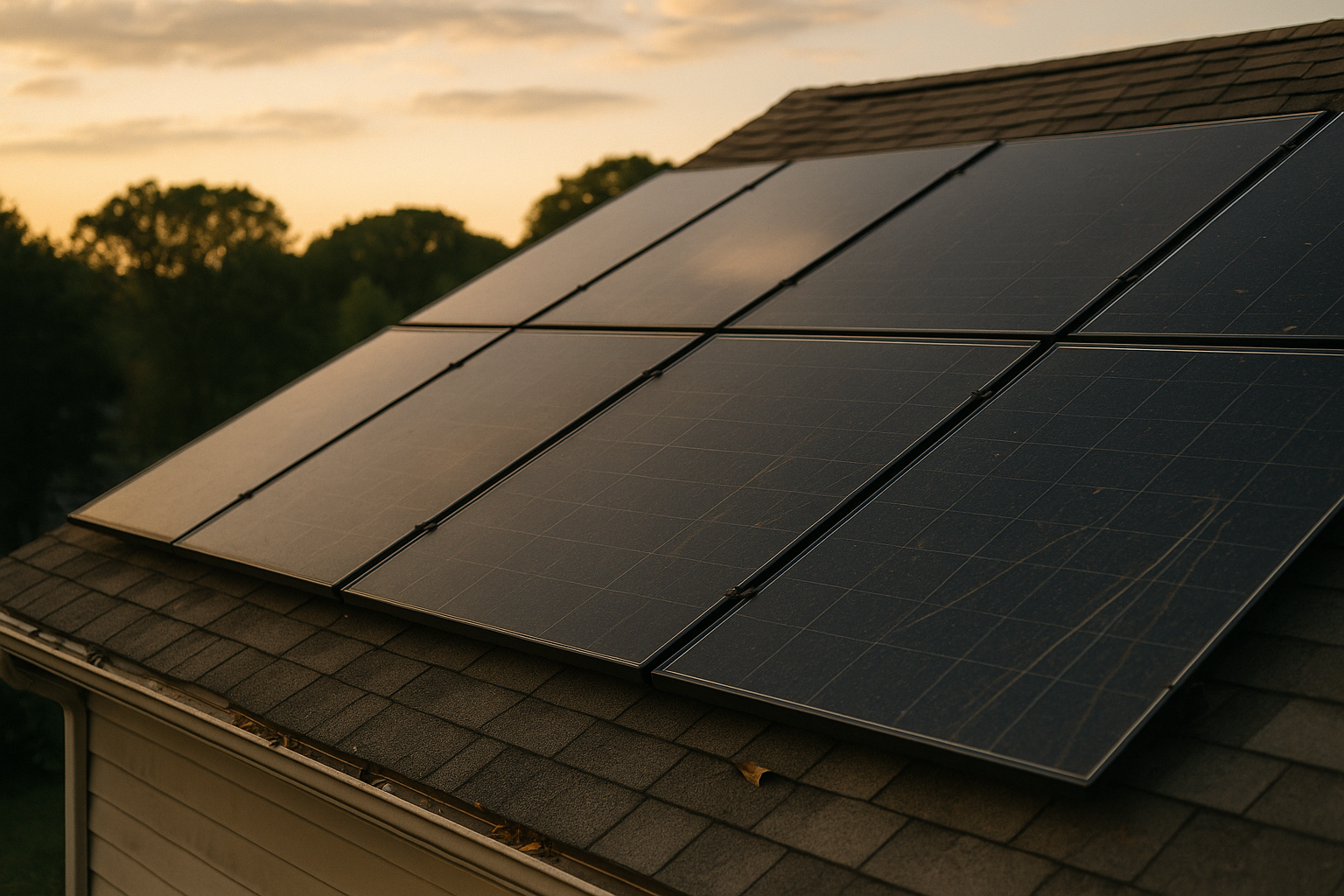
To choose wisely, consider your constraints and climate. Tight roof? A higher‑efficiency monocrystalline module helps maximize kW on the available area. Cool, diffuse-light regions may benefit from modules known for solid low-irradiance response and modest temperature coefficients. Ground-mounts on reflective surfaces (light gravel, concrete, snow) can make bifacial arrays appealing. If aesthetics and uniform color matter, many homeowners prefer all‑black modules, accepting a slight thermal penalty. The takeaway: match technology to roof space, temperature swings, structural limits, and the energy target, and you will end up with a system that works elegantly with your site rather than against it.
Costs, Incentives, and Payback: Turning Specs into Dollars and Decisions
Installed residential solar pricing commonly falls in a broad range, influenced by region, labor rates, permitting complexity, and equipment mix. A practical planning range for turnkey rooftop systems is often about $2.50–$4.00 per watt (before incentives). Commercial projects can trend lower per watt due to scale, while small or complex rooftops can skew higher. Operations and maintenance costs for rooftop PV are comparatively modest, typically focused on monitoring and occasional service over decades. The economic heart of a project is the annual kWh yield multiplied by your electricity rate, minus any fixed charges you still pay.
Consider a simple scenario to ground the math. Suppose a 6 kW system in a mid‑sun area produces 1,400 kWh/kW‑year. Annual generation is 6 × 1,400 = 8,400 kWh. At an electric rate of $0.20/kWh, that offsets about $1,680 in year‑one energy costs. If installed cost is $18,000 before incentives, and you apply a sizable tax credit or rebate where available, net cost might drop meaningfully. With modest degradation (say 0.5% per year) and potential utility rate increases over time, a payback window between roughly 6–12 years is common across many markets, though your local rules and rates can push results outside that range. The important point: use location‑specific irradiance, shading analysis, and your actual utility tariff to refine estimates.
Policy tools can shift the numbers considerably:
– Tax credits or deductions can cut net capital cost.
– Rebates or performance‑based incentives reward energy production.
– Net metering or export tariffs define how surplus power is valued.
– Low‑interest loans, solar leases, and power purchase agreements change cash flow profiles.
Financing strategy should fit your goals. Cash purchases avoid interest and capture the full stream of savings. Loans spread costs, trading interest for quicker access. Leases and PPAs can reduce or eliminate upfront expense, with payments indexed to expected kWh; they are convenient but reduce total lifetime savings and may include escalators. Ask for a transparent production estimate under conservative assumptions (weather variability, shading uncertainty), request a line‑by‑line price breakdown (modules, inverters, racking, labor, permits), and clarify interconnection timelines. When comparing quotes, normalize by dollars per watt, expected annual kWh, and warranty coverage, not just headline price. The outcome you want is clear: a system sized for your load and roof, financed comfortably, and supported by policies that value clean generation.
Site Assessment and Installation: Design Choices That Protect Performance
A thoughtful site visit sets the tone for everything that follows. Start with roof condition and structure: verify remaining shingle or membrane life, locate rafters or purlins for secure attachment, and confirm load capacity for modules, racking, and potential snow. Orientation and tilt drive baseline yield: in the northern hemisphere, azimuths near true south with tilts between 10–40° are common, but many east‑ or west‑facing roofs still perform well with only modest losses. Shading matters more than you think; even partial obstruction can depress output, so map nearby trees, chimneys, parapets, and vents across seasons.
Electrical design balances simplicity, safety, and efficiency:
– Array wiring should minimize voltage drop; keep DC homeruns short and use appropriate conductor sizes and insulation ratings.
– String inverters suit unshaded, uniform arrays, while module‑level power electronics (microinverters or DC optimizers) help when orientations or shading vary.
– Oversizing DC relative to inverter AC rating (e.g., 1.1–1.3 DC/AC ratio) can improve inverter utilization across the day without serious clipping losses in many climates.
– Rapid shutdown and grounding/bonding must follow current electrical codes; plan for clear labeling and accessible disconnects.
Mounting and weatherproofing protect the building envelope. Use flashed or fully sealed attachments appropriate to the roofing type; for flat roofs, ballasted systems reduce penetrations but require wind and seismic checks. Respect fire and access setbacks; local codes often require pathways near ridges and valleys. For ground‑mounts, evaluate soil, frost depth, and potential shading over system life as landscaping matures. Wind and snow loads vary widely; consult local design requirements and racking documentation to size spans, standoff heights, and attachment counts.
Permitting and interconnection can be brisk or slow depending on jurisdiction and utility. Typical steps include structural and electrical drawings, permit submission, utility application, and inspections. Lead times can stretch with supply or scheduling bottlenecks; set expectations in weeks, not days. Before work starts, confirm equipment lists, array layout drawings, and inverter placement to avoid last‑minute surprises. After commissioning, verify production against the model during a sunny period, and log serial numbers and warranty documents somewhere safe. Thoughtful design and tidy workmanship minimize callbacks and lock in the performance you modeled on paper.
Operations, Maintenance, and Your Decision Guide
Once energized, solar arrays are mostly quiet operators. Digital monitoring—through inverter portals or third‑party tools—helps you spot anomalies like a down string or underperforming module. Expect some seasonal swing: winter sun angles and shorter days reduce kWh, while spring and fall can deliver crisp, cool conditions that panels love. Light soiling often washes off with rain; in dusty or pollen‑heavy regions, gentle cleaning with deionized water on a cool morning can restore a few percent. Avoid abrasive brushes and high‑pressure sprays that can damage coatings or seals.
Key durability and service notes to factor into lifetime planning:
– Many module performance warranties extend 25–30 years with gradual output step‑downs.
– Inverter lifespans vary; string units often need replacement once over 10–15+ years, while some module‑level options aim for longer service intervals.
– Keep vegetation trimmed to prevent new shading, and review roof health periodically, especially after severe weather.
– Snow removal is optional; in most climates it slides off with sun and thaw cycles—forcing it can risk damage.
End‑of‑life considerations are gaining momentum. Panels are mostly glass, aluminum, and silicon, and recycling pathways are expanding in many regions. Project owners sometimes “repower” at year 15–25, swapping modules for higher‑efficiency units while reusing racking and electrical runs where code allows. Waste handling should follow local rules, and resale or reuse can keep older but functional modules in service on lower‑demand sites. Environmental benefits accrue not only from the kWh produced but also from responsible material recovery at retirement.
Your decision process can be as structured as a home energy audit:
– Confirm your annual kWh and peak usage months.
– Identify roof constraints and shade risks with a simple solar path tool.
– Request at least two quotes with clear production models and warranty terms.
– Compare not only $/W but also modeled kWh, temperature coefficients, and service plans.
– Choose financing that matches your cash flow and risk comfort.
Conclusion for Homeowners and Small Businesses
If you value predictable bills, quieter rooftops, and measured environmental gains, solar can be a well‑regarded addition to your property. Start with site fundamentals, pick technology that fits your constraints, run conservative economics, and insist on tidy engineering. Do that, and you set up a system that works steadily in the background, turning daylight into dependable value for years without drama or hype.